
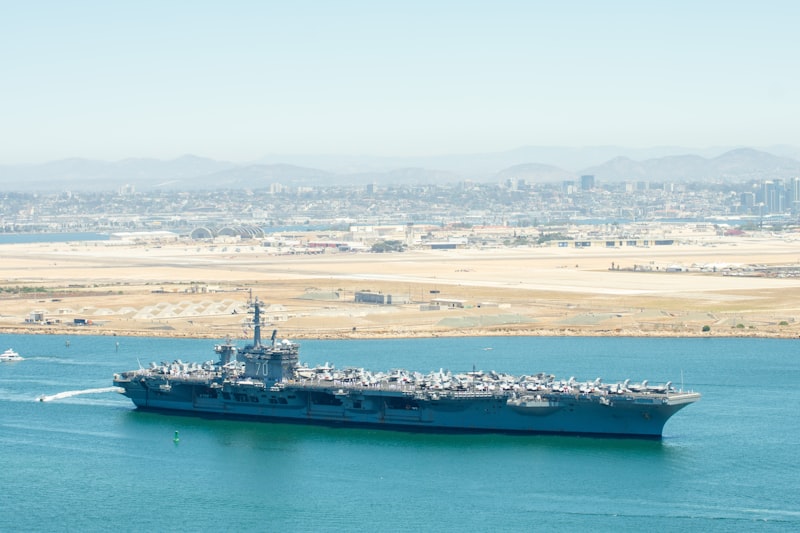
The United States military said on Wednesday that its blockade of Iranian ports has been “fully implemented” and all maritime trade entering and leaving Iran by sea has been halted. The announcement came 36 hours after the blockade began on 13 April.
Why it matters
An estimated 90% of Iran’s economy is fuelled by international trade by sea. A complete halt to maritime commerce represents the most severe economic pressure the US has applied to Iran since the conflict began 47 days ago.
The operation
CENTCOM Commander Admiral Brad Cooper said more than 10,000 sailors, Marines, and Air Force personnel are enforcing the blockade, supported by more than a dozen warships and over 100 surveillance and fighter aircraft.
In the first 24 hours, six merchant ships complied with US orders to turn around and re-enter Iranian ports. A US Navy destroyer intercepted two oil tankers attempting to leave Iran’s Chabahar port on the Gulf of Oman and instructed them by radio to reverse course.
Scope of the blockade
The blockade covers all Iranian ports on the Arabian Gulf and Gulf of Oman. CENTCOM said it is enforced impartially against vessels of all nations entering or departing Iranian ports and coastal areas.
US forces are maintaining freedom of navigation for vessels transiting the Strait of Hormuz to and from non-Iranian ports. Commercial shipping to other Gulf states continues.
Diplomatic context
The blockade is operating alongside a fragile ceasefire and ongoing diplomatic efforts. The White House said on Wednesday it feels “good about prospects of a deal” with Iran, with Pakistan as the likely venue for a second round of talks.
The Senate voted 47-52 on Wednesday to reject a war powers resolution that would have required congressional approval for continued military action against Iran. It was the fourth such vote to fail this year.