
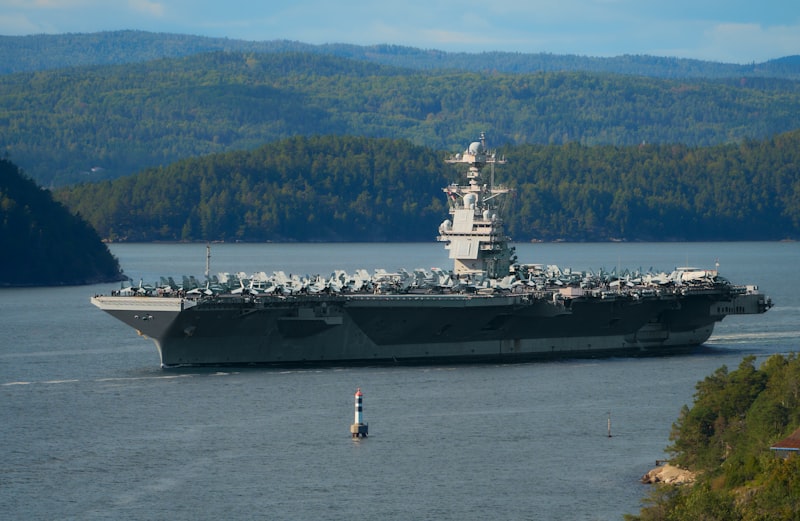
The US Navy began enforcing its blockade of Iranian ports at 10:00 a.m. ET on Monday, one day after President Trump announced the operation following the collapse of weekend peace talks.
Why it matters: The Strait of Hormuz carries roughly one fifth of the world’s daily oil supply. The blockade’s enforcement marks the first time since the 1962 Cuban Missile Crisis that the United States has imposed a naval blockade on a sovereign nation’s ports.
First hours
US Central Command said the blockade applies to all vessels entering or departing Iranian ports, regardless of flag state. Ships transiting to non-Iranian destinations may pass freely.
Within minutes of the deadline, the Botswana-registered tanker Ostria reversed course while attempting to transit the strait, changing its destination from Oman to the United Arab Emirates. According to shipping data provider Kpler, at least one sanctioned oil tanker, the Elpis, passed through the strait during the afternoon.
Roughly 3,200 vessels remained stranded west of the strait as of Monday morning.
Energy prices
Brent crude for June delivery held above $102 a barrel on Monday, having surged 7.4% on Sunday. US crude traded above $104. The global oil benchmark has risen approximately 40% since the war began in March.
US Energy Secretary Chris Wright said prices would remain elevated. “We’re going to see energy prices high, and maybe even rising, until meaningful ship traffic gets through,” Wright told reporters.
Iran’s position
Tehran called the blockade illegal under international maritime law. The Islamic Revolutionary Guard Corps reiterated its warning that any military vessels approaching the strait would face forceful resistance.
Vice President JD Vance said further talks depend on Iran. “The ball is in their court,” Vance said on Monday.
What happens next
The two-week ceasefire brokered on 7 April expires on 21 April. The blockade operates alongside it, targeting commercial shipping rather than military assets. Analysts warn that any Iranian attempt to challenge the naval cordon could trigger a broader military escalation.