
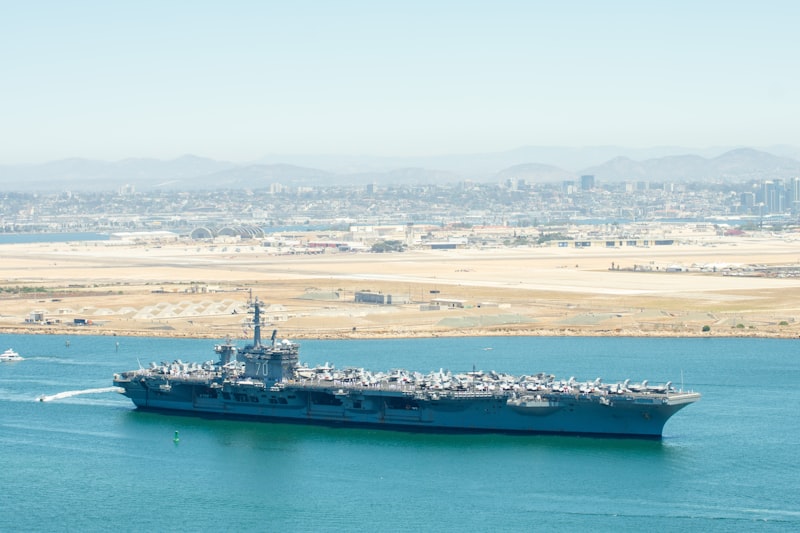
President Donald Trump announced late on Saturday that the United States Navy will blockade the Strait of Hormuz, hours after peace talks with Iran ended without a deal in Islamabad.
Why it matters: The strait carries roughly one fifth of the world’s daily oil supply. A naval blockade targeting Iranian ports marks a significant escalation in the six-week conflict and risks disrupting global energy markets at a time when crude prices have already risen more than 30% since hostilities began.
The order
Trump wrote on Truth Social that the US Navy would block “any and all ships trying to enter, or leave, the Strait of Hormuz.” He said the blockade would remain in place until Iran opens the strait to all traffic unconditionally.
US Central Command confirmed the operation will begin at 10:00 a.m. ET on Monday. It will be “enforced impartially against vessels of all nations entering or departing Iranian ports and coastal areas,” according to a CENTCOM statement.
Ships transiting the strait to and from non-Iranian ports will not be affected.
Iran’s response
Iran’s armed forces said the restrictions amount to piracy. The Islamic Revolutionary Guard Corps warned that “any military vessels attempting to approach the Strait of Hormuz will be dealt with harshly and decisively.”
Iran’s foreign ministry called the blockade a violation of international maritime law and the UN Convention on the Law of the Sea.
What led here
Vice President JD Vance departed Islamabad on Saturday without securing an agreement after 21 hours of negotiations. Iran refused to commit to abandoning its nuclear programme, the central US demand. Tehran blamed excessive American conditions for the breakdown.
The two-week ceasefire brokered on 7 April remains nominally in effect and expires on 21 April. The blockade operates alongside it, targeting commercial shipping rather than military assets.
What happens next
The blockade is expected to take full effect on Monday morning. Analysts warn it could trigger further military escalation if Iran attempts to challenge the naval cordon. Oil markets have already reacted sharply, with Brent crude surging above $103 a barrel on Sunday evening.