
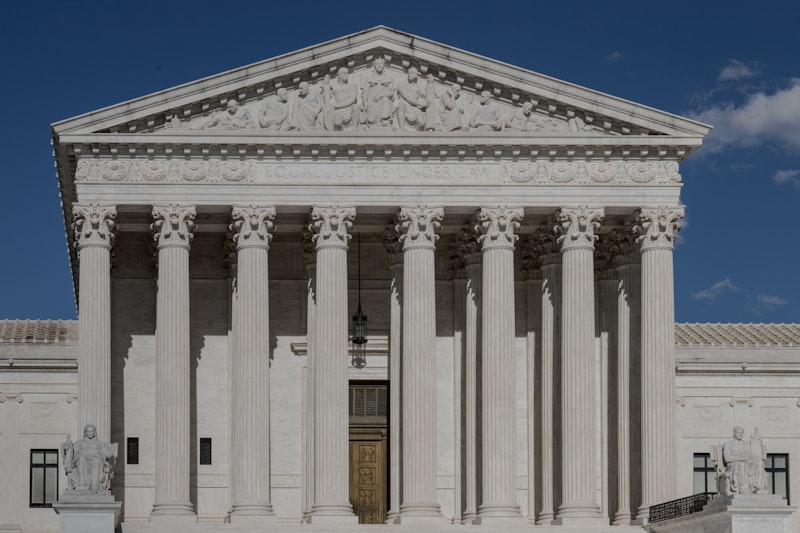
The US Supreme Court heard oral arguments on Wednesday in two consolidated cases that will determine whether the Trump administration can strip deportation protections from hundreds of thousands of immigrants who have lived and worked lawfully in the United States for years.
The cases, Mullin v. Doe and Trump v. Miot, concern the administration’s decision to terminate Temporary Protected Status for approximately 350,000 Haitian nationals and 6,000 Syrians. TPS shields nationals of designated countries from deportation when conditions in their home nations make return unsafe.
Why it matters
A ruling against TPS holders could expose up to 1.3 million people from all 17 TPS-designated countries to deportation. Many have lived in the US for more than a decade, own homes, run businesses, and have US-citizen children.
The administration’s position
The Department of Homeland Security argues that TPS designations are discretionary foreign-policy decisions and that federal courts have no authority to second-guess the executive branch’s determination that conditions in Haiti and Syria have improved enough to end the protections.
Former Homeland Security Secretary Kristi Noem terminated TPS for Syrians in September 2025, even as the State Department’s own assessments acknowledged ongoing armed conflict and humanitarian crisis in the country. The administration has characterised TPS as a temporary measure that was never intended to become permanent residency by another name.
The challengers’ argument
Immigrant advocacy groups, backed by amicus briefs from 19 state attorneys general and former senior US officials, argue that the terminations were politically motivated rather than based on country conditions. They contend that the Administrative Procedure Act requires the government to provide reasoned explanations for policy changes and that courts have a role in reviewing whether those explanations hold up.
Haiti remains one of the Western Hemisphere’s most unstable nations, with gang violence controlling large swaths of Port-au-Prince. Syria’s civil war has destroyed much of the country’s infrastructure despite a partial reduction in active fighting.
What happens next
The court is expected to issue a decision by the end of its current term in late June or early July. Lower courts have largely sided with TPS holders, issuing injunctions that have kept the protections in place during litigation.
If the court rules that TPS terminations are unreviewable, the administration would gain a powerful precedent to end protections for nationals of other countries, including El Salvador, Honduras, and Venezuela, without judicial oversight. If the court rules against the administration, it would reinforce the principle that even discretionary immigration decisions must survive basic legal scrutiny.