
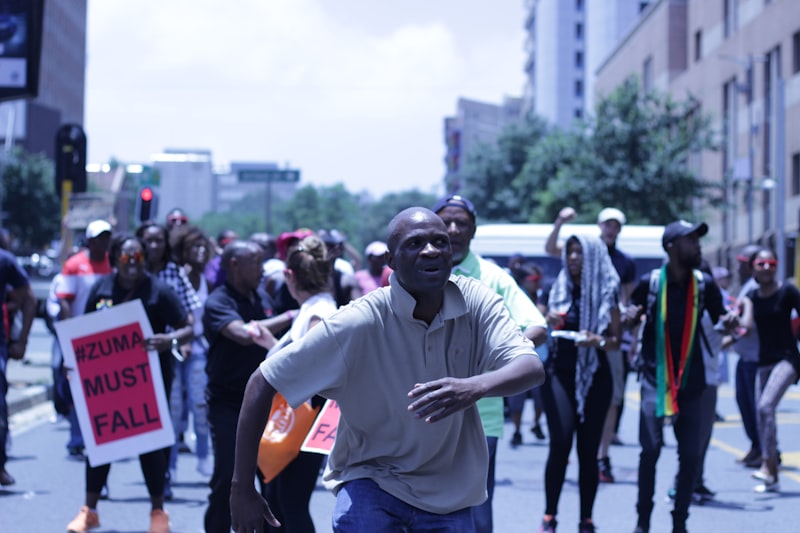
At least 250 people gathered at Mary Fitzgerald Square in Newtown on Wednesday before marching through central Johannesburg to demand stricter immigration enforcement and mass deportations.
The protest was organised by March and March, an anti-immigration group, and drew support from Operation Dudula, ActionSA and the Patriotic Alliance. The marchers delivered a memorandum to the ANC’s Luthuli House calling for tighter visa regulations, a review of asylum policies and action against businesses employing undocumented foreign nationals.
Why it matters
The march is the latest in a wave of anti-foreigner actions that have drawn diplomatic protests from Ghana and Nigeria and condemnation from the African Commission on Human and Peoples’ Rights. Organisers have called a nationwide shutdown for 4 May, raising the prospect of wider disruption.
The case for stricter enforcement
Supporters of the march argue that South Africa’s immigration system is broken, that undocumented foreign nationals undercut local wages and that the government has failed to enforce its own laws. ActionSA leader Herman Mashaba, who joined the march, said the government’s inaction was “a betrayal of South Africans who cannot find work.”
South Africa’s unemployment rate sits above 32%. Marchers say foreign nationals hold jobs that should go to citizens and that some are linked to criminal networks.
The case against the shutdowns
Critics, including civil society groups and several trade unions, warn that the protests are fuelling xenophobic violence. The Nigerian Union in South Africa advised members to close shops and stay indoors on Wednesday. Migrant-owned businesses across the Johannesburg CBD shuttered preemptively.
The African Commission on Human and Peoples’ Rights on 27 April called the violence “criminal acts perpetrated by individuals inciting violence and exploiting socio-economic conditions.” Economists note that many foreign-owned businesses employ South Africans and contribute to the local economy.
What happens next
The nationwide shutdown planned for 4 May will test whether the movement can mobilise beyond Gauteng. Government has not yet responded to the memorandum delivered at Luthuli House. The Department of Home Affairs has promised a statement before the weekend.
The diplomatic fallout continues. Nigeria and Ghana have both summoned South Africa’s envoys, and the Nigeria-SA trade roundtable in Lagos this week is proceeding under strained conditions.