
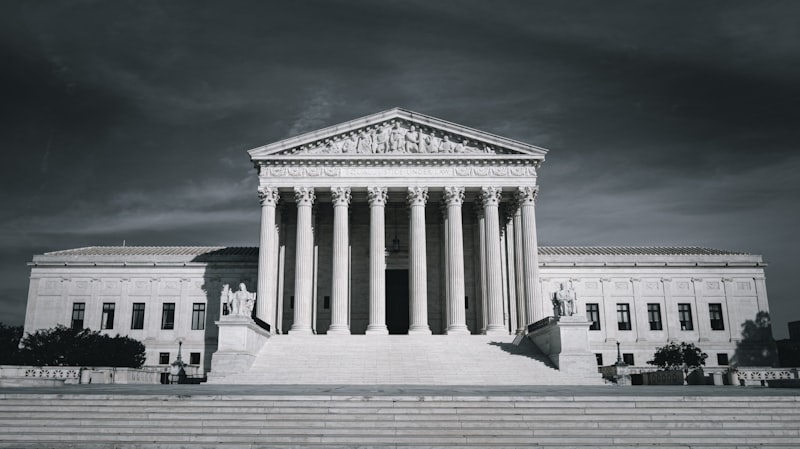
The US Supreme Court heard arguments on Monday in Chatrie v. United States, the first case to test whether geofence warrants comply with the Fourth Amendment. The outcome will set the rules for a surveillance tool that has been used thousands of times by law enforcement across the country.
Why it matters: A ruling in favour of the government would give police a template to demand the identity of every smartphone user near any crime scene. A ruling for Chatrie could curtail one of the most powerful digital search tools available to investigators.
The facts
In May 2019, a man robbed a credit union in Midlothian, Virginia, at gunpoint. Security footage showed the robber using a mobile phone inside the bank. After exhausting other leads, investigators obtained a geofence warrant ordering Google to identify every device within a 150-metre radius during a one-hour window around the robbery.
Google’s records returned 19 users who had opted into its location history feature. One of them was Okello Chatrie, who was ultimately convicted and sentenced to nearly 12 years in prison for the $195,000 robbery.
The government’s argument
Justice Department lawyers told the court that Chatrie voluntarily shared his location data with Google by enabling location history. Because he chose to share, they argued, he had no reasonable expectation of privacy in that data. The government also contended that investigators had probable cause to believe Google held information relevant to the crime.
The defence’s argument
Chatrie’s lawyers called the warrant a “dragnet search” that swept up private location data from 18 innocent people alongside the suspect. They argued that geofence warrants lack the specificity the Fourth Amendment requires because police cannot name the person they are searching for before executing the warrant.
Google’s position
Google, while not a party in the case, filed a brief urging “robust application of the Fourth Amendment to the modern digital context.” The company disclosed that it has objected to more than 3,000 geofence warrants on constitutional grounds. Google also noted it can no longer comply with such warrants because it now stores location history on users’ devices rather than centrally.
What happens next
The court is expected to issue its ruling by late June 2026. The decision will determine whether geofence warrants remain available to police or face new constitutional limits that could affect thousands of pending and future criminal cases across the country.