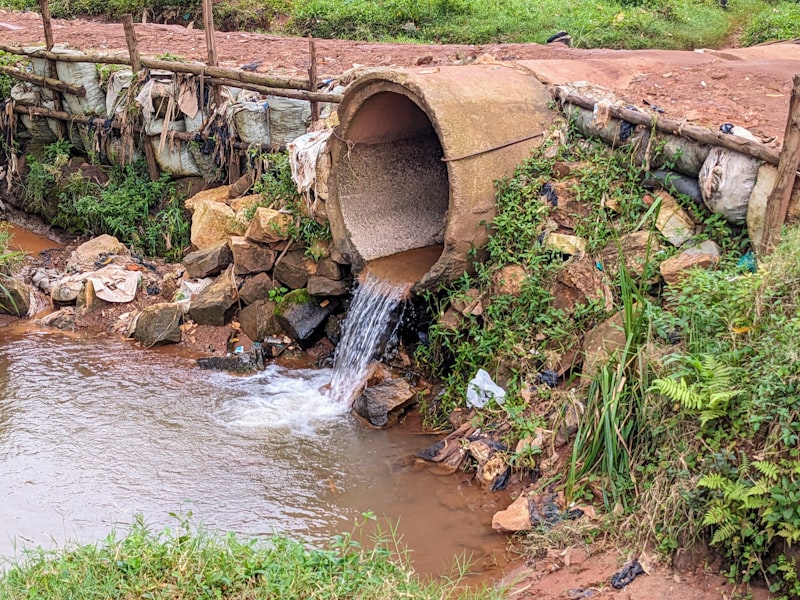
Nearly half of South Africa’s municipal water and wastewater systems have deteriorated to critical status, according to the government’s own Blue Drop and Green Drop assessments released in March. The reports paint a picture of accelerating infrastructure collapse across every province except the Western Cape.
Why it matters: the water crisis affects every household, farm, and business that depends on municipal supply. When treatment plants fail, raw sewage enters rivers that feed drinking water systems downstream.
The numbers
The percentage of critical water systems rose from 39% in 2022 to 47% in 2025. The number of critical wastewater systems climbed from 334 to 396 over the same period. Only 8% of systems now earn an excellent or good rating, down from 14% three years ago.
Green Drop certifications, awarded to well-run wastewater plants, fell from 22 to just 14 nationwide.
Raw sewage in rivers
Of the 144 water service authorities assessed, 90 have at least one wastewater plant discharging partially treated or untreated sewage directly into rivers. The Department of Water and Sanitation warned that this increases the risk of waterborne diseases including cholera.
In Gauteng alone, 15 of 16 metropolitan wastewater treatment plants perform below acceptable standards. Six are classified as critically failing.
The funding gap
The national infrastructure backlog stands at R400 billion. Government allocated R12.3 billion through the regional bulk infrastructure grant and water services grant for the 2025/26 financial year. At current spending rates, the backlog would take more than 30 years to clear.
Nearly half of all treated water generates no revenue due to leaks, theft, and billing failures. The national non-revenue water average sits at 47.3%.
Where it is worst
The Free State recorded the highest concentration of failing systems, with 98% rated poor or critical. The Northern Cape followed closely. The Western Cape and parts of Gauteng remain the only areas with pockets of good performance.
What happens next
Treasury has introduced a R54 billion performance-based incentive grant for metropolitan municipalities, conditional on implementing turnaround plans. Access requires ringfencing water revenue and measurably reducing non-revenue water.
The Department of Water and Sanitation has prioritised the 105 worst-performing water service authorities for targeted intervention. Whether the funding and oversight arrive before more systems collapse will determine whether millions of South Africans continue to receive safe drinking water.