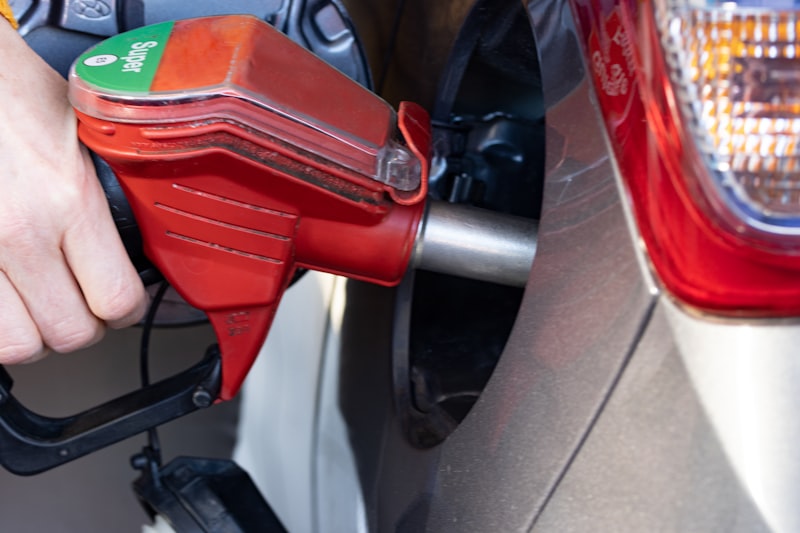
Two decisions in the next eight days will determine what South Africans pay at the pump from 6 May. One depends on diplomats in the Middle East. The other depends on Finance Minister Enoch Godongwana in Pretoria.
Why it matters: diesel powers South Africa’s logistics chain. A record May increase would raise transport costs for food, farming, mining, and manufacturing, hitting consumers who are already absorbing four years of above-inflation fuel prices.
The Hormuz variable
Iran proposed on Sunday to reopen the Strait of Hormuz and end hostilities with the United States, deferring nuclear negotiations to a later phase. Brent crude trades at $108 per barrel, nearly 50% above pre-war levels, driven largely by the nine-week Hormuz closure that has disrupted 20% of global seaborne oil.
If the deal holds, oil prices could fall sharply. Saudi Arabia, South Africa’s primary fuel supplier, would resume normal shipping through the strait.
But the offer omits any concession on uranium enrichment, which Washington has called non-negotiable. President Trump scrapped face-to-face talks on Saturday, calling them a waste of time. The proposal may stall before it reaches a negotiating table.
The levy cliff
Separately, the R3-per-litre temporary fuel levy cut introduced on 1 April expires on 5 May. The reduction lowered the general fuel levy from R4.10 to R1.10 per litre for petrol and from R3.93 to R0.93 per litre for diesel.
Godongwana said the government is considering an extension but warned the measure costs Treasury approximately R6 billion per month in foregone tax revenue. “For three months, we can survive,” he said, describing that as a “hard, hard deadline.”
Treasury and the Department of Mineral and Petroleum Resources have described the April cut as phase one of a two-phase intervention, with broader measures expected for May and June. No details of phase two have been published.
The combined hit
If the levy expires and Iran’s offer fails, current projections show diesel increasing by up to R9 per litre and petrol by up to R5 per litre in May. That would be the largest single-month fuel increase ever implemented in South Africa.
Even if Godongwana extends the levy relief, the Iran-driven crude price surge alone would push diesel up by approximately R4 to R4.50 per litre and petrol by R3.50 to R4.
The Automobile Association has warned that the combined shock extends far beyond the pump. Diesel-dependent sectors, including long-haul trucking, agriculture, and mining, would pass costs through to consumers within weeks.
What happens next
Cabinet is expected to announce its decision on the fuel levy by 5 May. The Department of Mineral and Petroleum Resources will publish final May fuel adjustments on 6 May. Whether Iran’s Hormuz proposal gains traction or collapses will become clear in parallel.
South Africans are watching two clocks. Neither is in their control.