
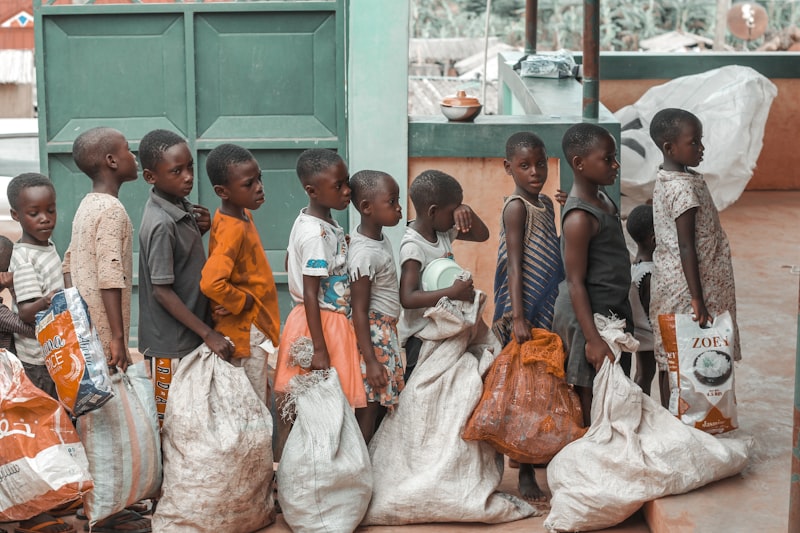
The number of people facing acute food insecurity worldwide has doubled in a decade, reaching 266 million across 47 countries in 2025. The tenth edition of the Global Report on Food Crises, released on 24 April, calls the levels “alarmingly high and deeply entrenched.”
Why it matters: For the first time in the report’s history, two famines were declared in a single year. The trend line is not flattening. It is accelerating, driven by conflicts that show no sign of ending.
The ten worst-hit countries
Ten nations account for two-thirds of all people facing high levels of acute hunger: Afghanistan, Bangladesh, the Democratic Republic of the Congo, Myanmar, Nigeria, Pakistan, South Sudan, Sudan, Syria, and Yemen.
Afghanistan, South Sudan, Sudan, and Yemen experienced the largest crises both in the share and absolute number of people affected. Sudan alone saw millions displaced by civil war that erupted in April 2023.
What is driving it
The report identifies three reinforcing drivers. Armed conflict remains the primary cause, displacing farming communities and destroying food supply chains. Climate variability, including floods in Pakistan and drought across the Horn of Africa, has compounded the damage.
Global economic uncertainty adds a third layer. Rising food and fuel prices, partly linked to disruptions in the Strait of Hormuz and the Red Sea, have pushed import-dependent nations deeper into crisis.
The famine threshold
The Integrated Food Security Phase Classification, the global standard for measuring food crises, declared famine conditions in two locations in 2025. This is the most severe designation, indicating that people are already dying from starvation.
The report notes that 1.4 million people experienced this catastrophic level of food insecurity, a figure the authors describe as almost certainly an undercount due to access constraints in conflict zones.
International response
The World Food Programme warned that funding has not kept pace with need. Humanitarian agencies received roughly 40% of requested funding for food security operations in 2025, the lowest fill rate in five years.
The European Union, which co-published the report, called for sustained investment in both emergency response and longer-term food system resilience. The report will be presented to the UN General Assembly in May.