
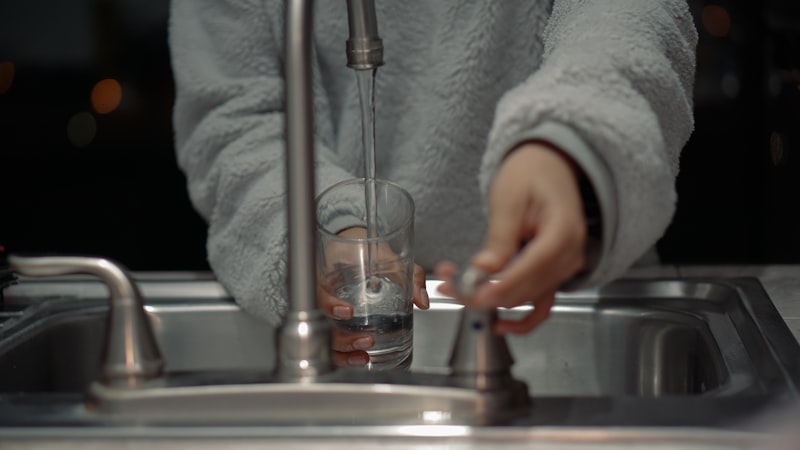
The Environmental Protection Agency designated microplastics and pharmaceuticals as priority contaminant groups in its draft Sixth Contaminant Candidate List, published on 2 April. It is the first time either category has appeared on the list in its 30-year history.
Why it matters: Americans ingest an estimated credit card’s worth of microplastic each week, according to a 2019 WWF study. Until now, no federal framework existed to evaluate whether those particles in drinking water pose a health risk at the tap.
What the list contains
The draft CCL 6 identifies four contaminant groups: microplastics, pharmaceuticals, per- and polyfluoroalkyl substances (PFAS), and disinfection byproducts. It also lists 75 individual chemicals and nine microbes.
EPA Administrator Lee Zeldin announced the action alongside HHS Secretary Robert F. Kennedy Jr., framing it as part of the administration’s Make America Healthy Again agenda.
What it means in practice
Inclusion on the contaminant candidate list does not itself create enforceable drinking water standards. It signals that the EPA considers the contaminants worth studying for potential regulation under the Safe Drinking Water Act.
The agency also released human health benchmarks for 374 pharmaceuticals. These are not enforceable limits, but they give local water utilities a reference point for assessing risk when pharmaceuticals are detected.
PFAS OUT initiative
Separately, the EPA launched PFAS OUTreach, a programme to engage roughly 3,000 water systems nationwide that have known challenges with PFOA and PFOS contamination. That represents about 2% of the country’s public water systems.
The initiative aims to ensure those systems are aware of available technical and financial support ahead of compliance deadlines for the federal PFAS drinking water standard finalised in 2024.
What happens next
Public comments on the draft CCL 6 close on 5 June 2026. The EPA will consult its Science Advisory Board before finalising the list, which the agency expects to sign by 17 November 2026.
If the EPA ultimately decides to regulate microplastics in drinking water, it would then need to develop a maximum contaminant level through a separate rulemaking process. That typically takes several years.