
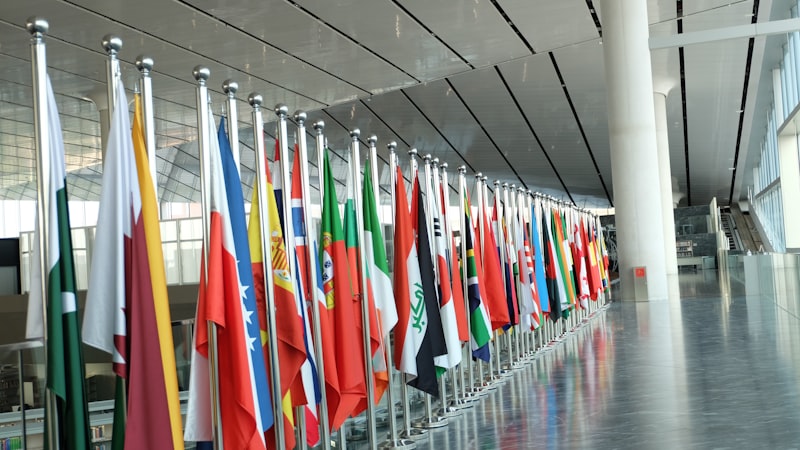
BRICS deputy foreign ministers met in New Delhi on Thursday to discuss the Middle East and North Africa, in the first MENA-focused meeting under India’s 2026 chairship. All 11 member states — Brazil, Russia, India, China, South Africa, Egypt, Ethiopia, Iran, the UAE, Indonesia, and Saudi Arabia — were represented.
Why it matters
BRICS now includes several countries on opposite sides of the Middle East’s conflicts. Egypt, Iran, Saudi Arabia, and the UAE sit at the same table, making BRICS one of the few forums where adversaries engage directly on regional security. The bloc’s positions carry weight with the Global South, which looks to BRICS as a counterbalance to Western-led institutions.
What was discussed
The meeting covered the Gaza humanitarian crisis, the role of UNRWA, the civil war in Sudan, post-conflict reconstruction in Syria, the political process in Yemen, stability in Iraq, and the situation in Libya.
Members expressed what India’s foreign ministry described as “deep concern” over the situation in the Middle East. The group adopted a zero-tolerance position on terrorism.
South Africa’s role
South Africa participated as BRICS’ most prominent advocate for Palestinian statehood. Pretoria has pursued genocide proceedings against Israel at the International Court of Justice and has used its 2025 G20 presidency to push for multilateral approaches to Middle East peace.
South Africa’s dual role — leading both the G20 and sitting in BRICS — gives it unusual diplomatic leverage on issues where the two groupings diverge, particularly on Gaza and sanctions policy.
The expanding bloc
The meeting underscored how BRICS expansion has changed the bloc’s character. With Egypt, Iran, Saudi Arabia, and the UAE now members, BRICS discussions on the Middle East involve countries with direct stakes in the outcomes, not just observers with policy preferences.
Indonesia’s membership, formalised earlier this year, also brings the world’s largest Muslim-majority nation into BRICS deliberations on issues affecting Muslim populations across the region.
What happens next
The deputy ministers agreed to meet again under China’s chairship in 2027. India’s BRICS presidency runs through the end of 2026, with the leaders’ summit expected later this year.