
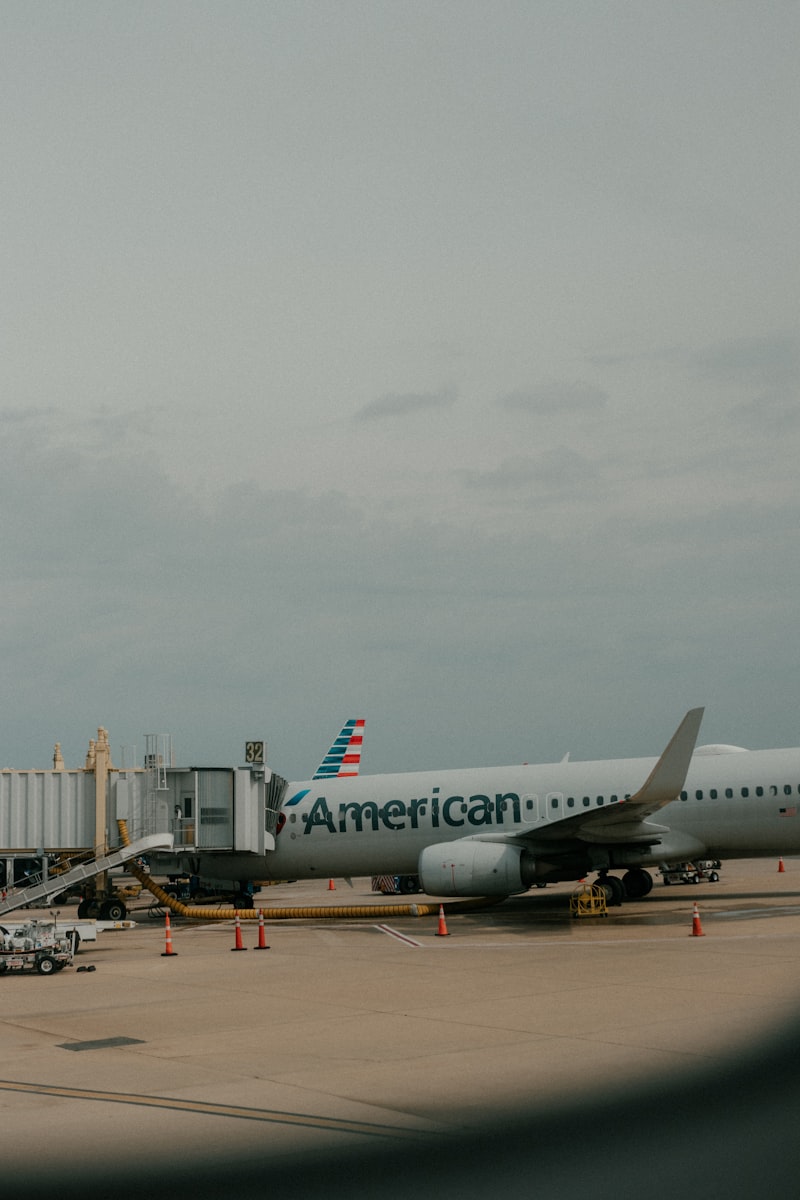
American Airlines delivered record first-quarter revenue of $13.9 billion, a 10.8% increase over the same period last year. Passenger revenue reached $12.5 billion and the airline recorded the nine highest revenue intake weeks in its 100-year history.
Why it matters
The operational strength could not offset the industry’s biggest challenge. American slashed its full-year adjusted earnings guidance to a range of negative $0.40 to $1.10 per share, down sharply from the $1.70 to $2.70 range forecast in January.
The fuel equation
The revision stems from an estimated $4 billion increase in fuel expenses for 2026, driven by crude oil prices that have surged past $100 per barrel since the outbreak of the Iran conflict. At the midpoint, management said the full-year result would be roughly flat compared with 2025, despite stronger demand.
American is not alone. United Airlines cut its full-year adjusted EPS forecast from $12–$14 to $7–$11. Delta has also issued cautious guidance. All three carriers cite fuel volatility as the dominant risk to margins.
Operational bright spots
American narrowed its first-quarter net loss to $382 million from $473 million a year ago. Total debt fell to $34.7 billion, its lowest level since mid-2015. Cargo revenue rose 12.9% and ancillary revenue jumped 23.9%.
The industry picture
Airlines entered 2026 with strong demand fundamentals. Load factors remain high and business travel has continued its post-pandemic recovery. But fuel represents roughly 30% of operating costs for major carriers, and the Iran-driven price shock has wiped out margin gains that airlines spent years building.
Investors now face a sector split between strong top-line growth and compressed profitability. American shares fell 4% in after-hours trading following the guidance cut.