
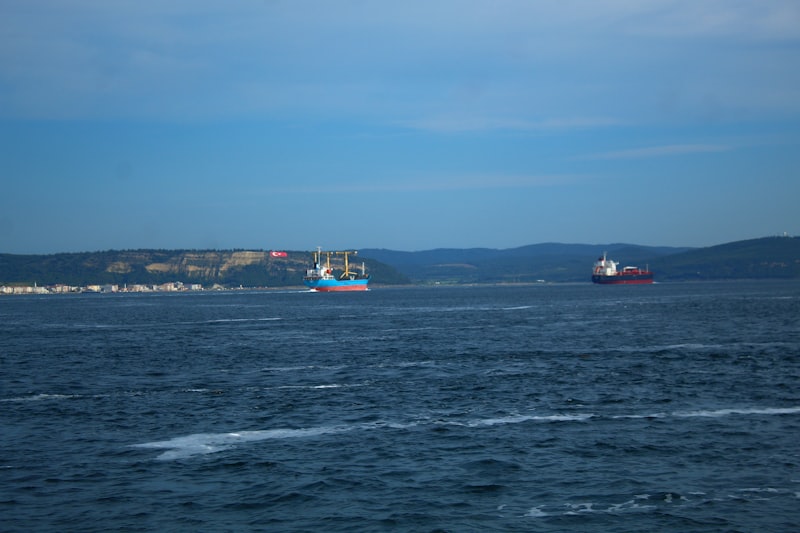
Iran’s Revolutionary Guard Corps seized two container ships in the Strait of Hormuz on 22 April, the first vessel captures since the US-Iran war began in February. Commercial traffic through the strait ground to a halt within hours.
Why it matters
The Strait of Hormuz carries roughly 20 million barrels of oil per day, about one-fifth of global seaborne supply. The seizures sent Brent crude past $103 per barrel and raised the prospect of a prolonged shipping shutdown through the world’s most critical energy chokepoint.
What happened
The Guard’s naval unit captured the Panamanian-flagged MSC Francesca and the Liberian-flagged Epaminondas, claiming both vessels had “endangered maritime security by operating without required authorisation and by tampering with navigation systems.” A third vessel, the Greek-owned Euphoria, was stranded on Iranian shores.
The attacks began hours after Trump announced he was extending the ceasefire with Iran indefinitely so Tehran could “come up with a unified proposal.” Iran’s response was swift and hostile. A senior adviser to Supreme Leader Khamenei told state media the ceasefire “means nothing” while the US naval blockade of Iranian ports continues.
The diplomatic track
Trump told reporters there is “no time frame” for the conflict and denied that midterm election calculations are influencing his approach. Vice President Vance is in Pakistan preparing for another round of ceasefire negotiations.
The gap between the two sides remains wide. The US demands Iran halt its nuclear enrichment programme. Iran demands the US lift its naval blockade before any talks can proceed. Neither side has shown willingness to move first.
Market impact
Brent crude closed at $103.38 per barrel on 23 April, up from $98.41 the previous day. Only one commercial vessel, the bulk carrier LB Energy, was observed transiting the strait on Thursday morning. The products tanker Ocean Jewel aborted its transit when Iranian forces began firing.
Bloomberg reported that marine insurers are now refusing to cover vessels transiting the strait, effectively making commercial passage uneconomical even if Iran allows it.
What happens next
The Vance talks in Pakistan are the last active diplomatic channel. If they collapse, the US blockade and Iran’s counter-seizures could create a sustained shutdown of Hormuz traffic. The International Monetary Fund has warned that prolonged closure would shave at least 0.5 percentage points off global GDP growth this year.