
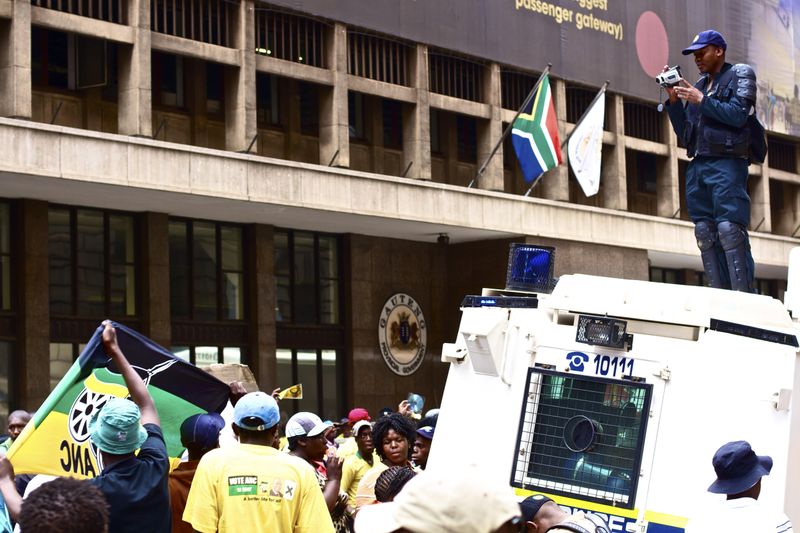
The ANC’s national executive committee has resolved that members who vote for or campaign for the South African Communist Party in the 2026 local government elections will be taken to disciplinary hearings.
The decision, taken at a special NEC sitting on 11 April, invokes sections of the ANC constitution that bar members from joining or supporting an opposing party. It is the sharpest public break in a tripartite alliance that has held since the 1950s.
Why it matters
The SACP has never stood against the ANC at the ballot box. If the resolution holds, thousands of dual-membership holders will be forced to choose a side before election day, reshaping ward-level politics in provinces where both parties draw from the same voter base.
The SACP’s position
General secretary Solly Mapaila has been unyielding. The party resolved in December 2024 to contest elections independently, citing the ANC’s entry into a Government of National Unity with the Democratic Alliance.
Mapaila argues the GNU does not serve the interests of Black South Africans and the working class. The SACP will field and finance its own candidates in selected wards, focusing on municipalities where service delivery has collapsed.
The ANC’s response
President Cyril Ramaphosa first ordered SACP members to recuse themselves from ANC election strategy structures in December 2025. The April NEC resolution escalates the consequences from exclusion to expulsion.
ANC secretary-general Fikile Mbalula acknowledged that the party had “failed” to prevent the split through negotiation. He said the NEC would communicate the decision to the SACP leadership within two weeks.
What happens next
The 2026 municipal elections are expected in the second half of the year. The SACP must still register with the Electoral Commission as a contesting party. If it does, the ANC faces the risk of vote-splitting in its urban strongholds, particularly in Gauteng, KwaZulu-Natal and the Eastern Cape, where SACP structures are strongest.
The Congress of South African Trade Unions, the third partner in the alliance, has not taken a public position on the ultimatum.