
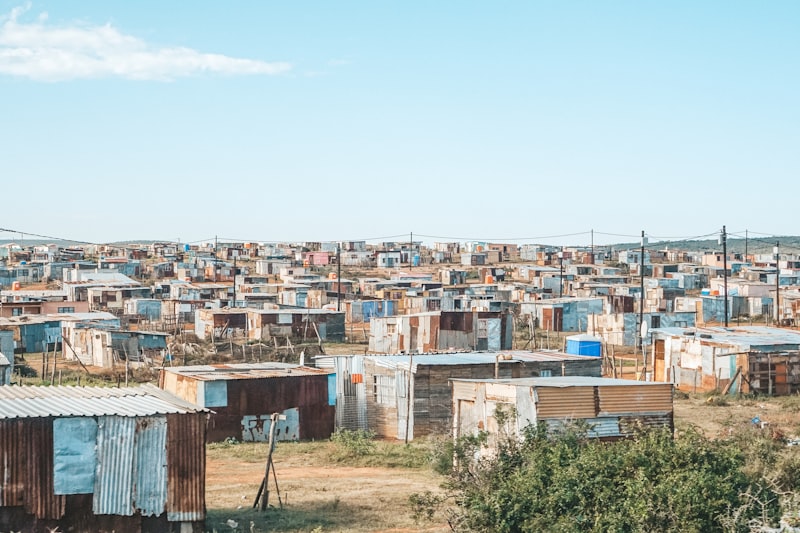
Public Works and Infrastructure Minister Dean Macpherson announced that the government will return to the Western Cape High Court to regain control of Knoflokskraal, a sprawling informal settlement on state-owned land near Grabouw. The department described the occupation as serious, entrenched, and unsustainable.
Why it matters: Knoflokskraal is one of the largest illegal land occupations in the Western Cape. The government has spent R41.4 million over four years without halting its growth, raising questions about the state’s capacity to manage land disputes that affect thousands of families.
The four-pillar plan
Macpherson outlined a structured approach to tackle the occupation. The first pillar is containment, including controlled access points and aerial mapping to monitor new structures. The second is social facilitation, involving profiling residents and collecting socio-economic data.
The third pillar focuses on direct engagement with residents rather than relying on intermediaries or contested leadership structures. The fourth involves law enforcement. Macpherson noted that criminal cases have been opened over several years but progress has been limited.
How it grew
The 1,800-hectare site, intended for forestry use, was first occupied during the COVID-19 pandemic in 2020. It has since expanded to an estimated 15,000 people living in approximately 4,000 structures. The government plans to ask the court to strengthen a previous containment order to prevent further expansion.
The other side
Community leaders reject the government’s framing of the situation. A Knoflokskraal community leader told EWN on 8 April that residents are wrongfully being deemed lawless squatters. Activists have argued that the crisis cannot be solved through a narrow law and order approach alone.
They point to the housing backlog and chronic poverty as root causes. According to government figures, more than 1.2 million households in the Western Cape are on the housing waiting list. Land occupations, activists argue, are a symptom of a system that has failed to deliver adequate housing at the scale required.
What happens next
The department will approach the Western Cape High Court in the coming weeks. Macpherson has also requested that the Police Minister provide a comprehensive update on investigations linked to Knoflokskraal. The outcome of the court bid will determine whether the state can enforce boundaries on a settlement that has grown faster than its legal efforts to contain it.