
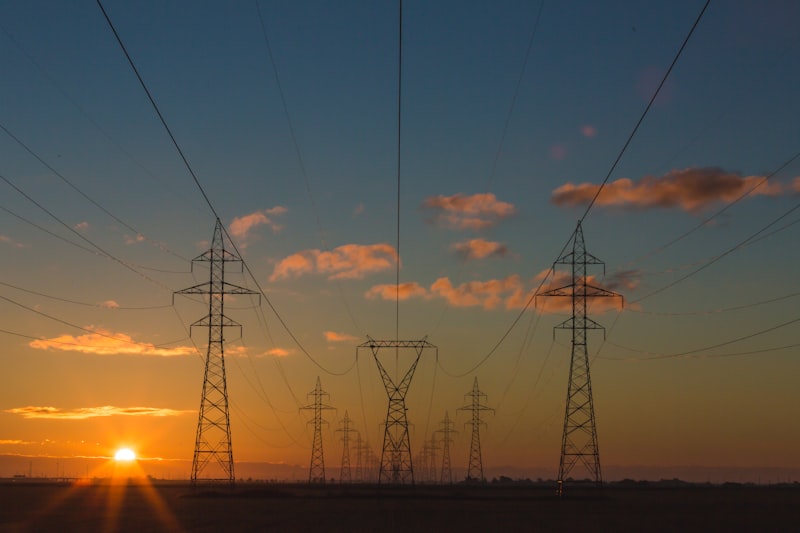
The milestone
Eskom confirmed in late March 2026 that South Africa had reached 315 consecutive days without a load shedding interruption. The power utility’s Energy Availability Factor (EAF) — the percentage of installed generation capacity available for dispatch — stood at 65.37% for the 2025-26 financial year to date. That represents a 10.8% improvement on the same period the previous year.
Only 26 hours of load shedding were recorded during the entire 2025-26 financial year, compared to 6,955 hours in the 2022-23 financial year when load shedding reached Stage 6 on multiple occasions.
Why it matters
The end of systematic load shedding is the single most significant change to South Africa’s economic operating environment in a decade. Business investment decisions, cold chain logistics, manufacturing throughput, and household quality of life are all directly affected by grid reliability. The investment pledges announced at the 2026 South Africa Investment Conference this week were made against the backdrop of a grid that has demonstrated sustained stability for nearly a year.
How the improvement was achieved
Eskom attributes the turnaround to three factors. First, the utility accelerated planned maintenance across its coal fleet during periods of improved reserve capacity, improving the condition of aging plant. Second, new generation capacity from independent power producers — primarily solar and wind — came online under the Renewable Energy Independent Power Producer Procurement Programme, reducing the load on coal units. Third, Eskom restructured its forensic, security, and investigative functions under a newly established Group Investigations and Security Division that reports directly to the Group Chief Executive, with the aim of reducing the infrastructure crime that had previously cost the utility R221 million in a single year.
Infrastructure crime remains a risk
Eskom’s latest security data shows infrastructure-related crime cost the utility R221 million between April 2024 and February 2025, down from R271 million in the equivalent prior period. Cable theft incidents still cost an estimated R5 billion to R7 billion per year across the South African economy, with the bulk affecting the power sector. In KwaZulu-Natal, electricity theft is estimated to cost Eskom R6 billion annually, with some areas showing payment rates as low as 10%.
The utility noted that intelligence-driven operations with the South African Police Service have led to multiple arrests, including a recent case in which six suspects were found with stolen Eskom equipment valued at R1.5 million.